
Cen Mould (En 196-1)
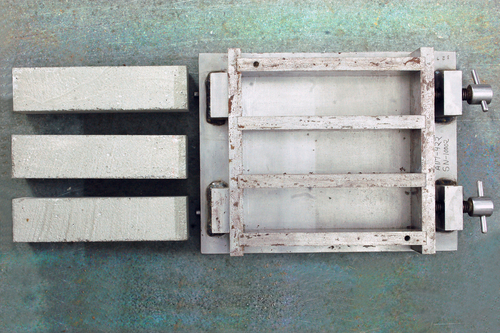
Product Details:
- Form Mould/Prism
- Machines Type Manual (Hand Operated)
- Usage Laboratory preparation of test specimens
- Application Cement and mortar testing laboratories
- Features Three gang moulds, Precision tolerance, Easy assembly and disassembly
- Material Grade AISI 304/316
- Installation Type Table Top
X
Cen Mould (En 196-1) Price And Quantity
- 1 Unit
Cen Mould (En 196-1) Product Specifications
- Manual (Hand Operated)
- Stainless Steel
- Mould/Prism
- Rectangular (Prism)
- 40 mm x 40 mm x 160 mm (Approx)
- Three gang moulds, Precision tolerance, Easy assembly and disassembly
- Cement and mortar testing laboratories
- Laboratory preparation of test specimens
- Polished
- Table Top
- Approx. 2 kg
- Silver Finish
- High grade stainless steel
- AISI 304/316
- Precision machined, Rugged construction, Corrosion resistant
Cen Mould (En 196-1) Trade Information
- 1 Unit Per Day
- 1 Week
Product Description
Cen Mould (En 196-1)
How to Test Standard Cement Sand Mortar as per BS EN 196-1
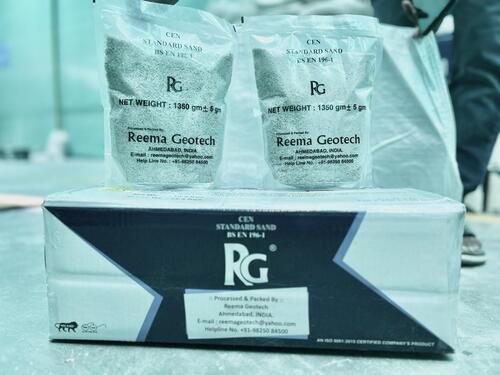
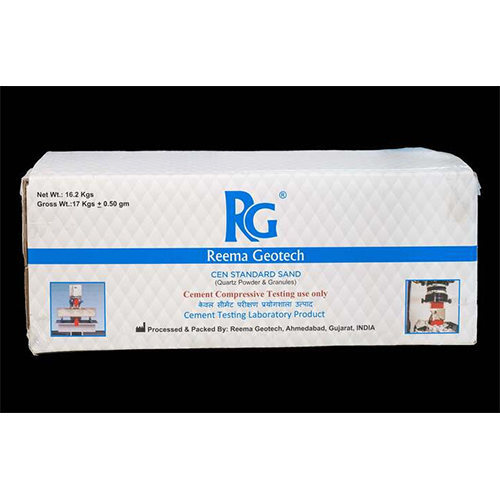
Sand: CEN STANDARD SAND CONFORMING TO BS EN 196-1.
Preparation of Mortar
- Cement: 450 gm + 2 gm
- Sand (CEN): 1350 gm + 5 gm
- Water (Distilled): 225 gm + 1 gm
- Specimen 40 mm x 40 mm in cross section and 160 mm in length (Confirming to BS EN 196-1).
- 40 mm x 40 mm x 160 mm
- Type of Moulding: Cement Jolting apparatus(Confirming to BS EN 196-1).
- Mixing of Mortar: Mechanically mortar mixer
- Speeds of mixer
- Low speed 140 rpm + 5 rpm
- High speed 285 rpm + 10 rpm
Engineered for Laboratory Excellence
This precision-machined stainless steel prism mould is specifically designed for rigorous cement and mortar testing in laboratory settings. The rugged build and high-grade materials guarantee longevity and resistance to corrosion, making it suitable for repeated use. Three gang moulds allow for simultaneous specimen preparation, saving valuable time without compromising consistency or accuracy.
Seamless Assembly and Maintenance
The Cen Moulds modular design ensures fast assembly and disassembly, streamlining your sample preparation process. Polished surfaces prevent sample adherence, simplifying cleaning and maintenance between tests. Its table-top installation type is compatible with most laboratory spaces, contributing to an efficient workflow.
FAQs of Cen Mould (En 196-1):
Q: How is the Cen Mould (EN 196-1) used in cement and mortar testing laboratories?
A: The Cen Mould is used for the laboratory preparation of cement and mortar test specimens. Its three gang configuration allows technicians to simultaneously cast multiple prisms, ensuring efficiency and consistent dimensions during strength and quality testing as per EN 196-1 standards.Q: What are the main benefits of using a stainless steel prism mould like this one?
A: Key benefits include high resistance to corrosion, consistent accuracy due to precision machining, robust durability from premium AISI 304/316 stainless steel, and easy cleaning thanks to its polished surface. These features ensure reliable performance over prolonged laboratory use.Q: When should I choose a three gang mould over a single gang mould?
A: A three gang mould is recommended when efficiency and consistency are needed in preparing multiple test specimens at once. This approach guarantees uniformity across samples, improving the reliability of comparative test results in research or quality control.Q: Where can the Cen Mould be installed or used?
A: Designed as a tabletop apparatus, the Cen Mould is perfect for installation in most laboratory environments focused on cement and mortar testing. It fits well on standard benches, allowing convenient and safe operation.Q: What is the process for assembling and disassembling the Cen Mould?
A: The mould features precision-machined parts that fit together easily. Assembly involves aligning and fastening the components, while disassembly requires loosening these fasteners for quick removal and cleaning. This streamlined process minimizes downtime between test preparations.Q: What materials and grades are used in the construction of this mould?
A: The mould is manufactured from high-purity stainless steel, specifically AISI 304 or 316 grades. These materials provide excellent chemical resistance, structural integrity, and longevity, even when exposed to harsh laboratory conditions.Tell us about your requirement

Price:
Quantity
Select Unit
- 50
- 100
- 200
- 250
- 500
- 1000+
Additional detail
Mobile number
Email

Other Products in 'CEN SAND (BSEN 196-1)' category

PINAL CORPORATION
Quality Is Not a Matter Of Chance Testing Ensures Quality
Quality Is Not a Matter Of Chance Testing Ensures Quality

- Survey No: 101, Part B, T.P. 217, Opp. Jay & Rahul Farm, K.K Patel Farm Road, Shilaj,Ahmedabad - 380059, Gujarat, India
- Phone : 07971191341

- Send Inquiry
- Mr. Pinal Patel
919825084500
 Send Inquiry
 Send Inquiry
 Send SMS
 Call Me Free
PINAL CORPORATION
All Rights Reserved.(Terms of Use)
Developed and Managed by Infocom Network Private Limited.
Developed and Managed by Infocom Network Private Limited.

