
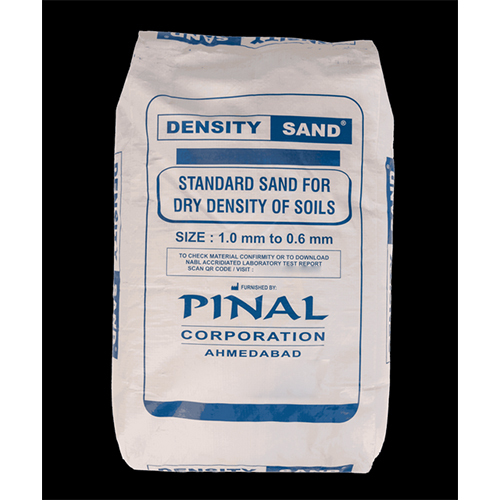
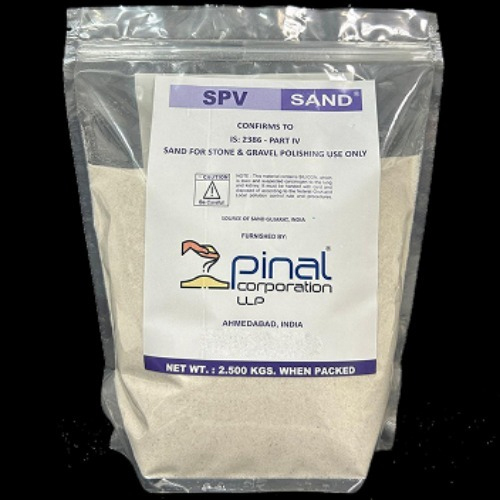
Density Sand (IS -2720-PART XXVIII)
Product Details:
- Color White
- Fineness Yes
- Sand Fineness Medium
- Heat of Hydration Low Heat
Density Sand (IS -2720-PART XXVIII) Price And Quantity
- 1 Ton
Density Sand (IS -2720-PART XXVIII) Product Specifications
- Medium
- Yes
- White
- Low Heat
Density Sand (IS -2720-PART XXVIII) Trade Information
- Cash in Advance (CID)
- 1000 Ton Per Month
- 7 Days
- Yes
- Asia
- All India
Product Description
Sand Density refers to the mass per unit volume of sand and it is a critical property used in construction especially in concrete and mortar production Sand density affects the proportioning of ingredients in concrete mix designs influencing workability strength and durability of the final product
In construction understanding the density of sand helps in determining how much sand is needed for a given volume and also ensures that the sand meets the desired quality standards
Applications of Sand Density
Concrete and Mortar In concrete and mortar mix designs the density of sand determines the weight and volume of sand to be used Correct sand density ensures that the mix has the right balance of ingredients for strength and durability
Construction Quality Knowing the density of sand helps in ensuring that the material is suitable for use in construction and that it meets the necessary specifications for strength stability and durability
Soil and Landscaping In soilbased applications or landscaping sand with specific density can be used to improve drainage or stability
Conclusion
The density of sand is a fundamental property that affects its performance in concrete mortar and other construction applications Accurate measurement of sand density is crucial for determining the correct mix design ensuring quality and achieving the desired physical properties of the final product Sand density is typically tested in accordance with IS 2386 Part 28 to ensure that it meets the requirements for construction use
High Precision for Soil Density Testing
Engineered for laboratory applications, this density sand guarantees high precision in evaluating the dry density of soils. With a controlled diameter between 1.0 mm and 0.6 mm, its composition ensures reliable results vital for construction and research applications.
Standardized Materials for Reliable Results
Manufactured to meet IS -2720-PART XXVIII standards, the sand maintains strict purity and granulometry criteria. Its medium fineness and irregular grain shape aid adherence to robust testing protocols, delivering consistent measurements in diverse lab settings.
FAQs of Density Sand (IS -2720-PART XXVIII):
Q: How is Density Sand (IS -2720-PART XXVIII) used in laboratory testing?
A: Density Sand is utilized as a standard material in laboratory procedures to determine the dry density of soils. Its precise granule size and purity help ensure accuracy during compaction and density measurements using specific soil testing methods.Q: What is the main benefit of choosing high purity, standardized sand for soil density tests?
A: High purity and standardized granulometry provide reliable, repeatable results in soil density tests. This minimizes errors and discrepancies in engineering assessments, supporting structural integrity and site suitability evaluations.Q: When should Density Sand with 1.0 mm to 0.6 mm grain size be applied for testing?
A: Density Sand is appropriate for laboratory testing whenever dry density determination for soils is required, typically during site investigation, foundation design, and quality control in construction projects.Q: Where is this sand typically installed or used?
A: This sand is specifically designed for laboratory installations where geotechnical or civil soil testing is conducted. It is not suitable for field applications or general construction use due to its controlled properties.Q: What is the process for using Density Sand in dry density measurements?
A: The process involves placing the granular sand in a soil sample container and following standardized procedures outlined in IS -2720-PART XXVIII, which includes compaction, measurement, and calculation of dry density based on sand displacement.Q: Is the sand treated or modified for laboratory use?
A: No, Density Sand is supplied untreated, maintaining its natural grain structure and purity. This ensures compatibility with standard soil testing protocols and prevents chemical interference during analysis.
Price:
- 50
- 100
- 200
- 250
- 500
- 1000+

Other Products in 'Standard Sand' category

Quality Is Not a Matter Of Chance Testing Ensures Quality

- Survey No: 101, Part B, T.P. 217, Opp. Jay & Rahul Farm, K.K Patel Farm Road, Shilaj,Ahmedabad - 380059, Gujarat, India
- Phone : 07971191341

- Send Inquiry
- Mr. Pinal Patel
919825084500
 Send Inquiry
 Send Inquiry
 Send SMS
 Call Me Free
Developed and Managed by Infocom Network Private Limited.

